
EMS Treatment Basingstoke : How Pelvic Floor Muscle Stimulation Works
Pelvic floor muscles have an important role in bladder control, bowel function, and support for the pelvic organs. Like other muscles, they can weaken or function less effectively because of factors such as pregnancy, childbirth, ageing, hormonal changes, or certain medical conditions.
Pelvic floor muscle exercises are commonly recommended to help improve strength, coordination and control. However, some people may find it difficult to identify or activate these muscles correctly.
EMS treatment is a non-invasive approach that uses electromagnetic stimulation to produce contractions in the pelvic floor muscles.
At Lipo 360, we offer consultation-led pelvic floor muscle stimulation for suitable individuals. Treatment suitability depends on personal circumstances, symptoms, medical history and any relevant health conditions.
EMS treatment is not a substitute for medical assessment, pelvic health physiotherapy, or recommended first-line treatment for urinary incontinence.
What Is EMS Treatment?
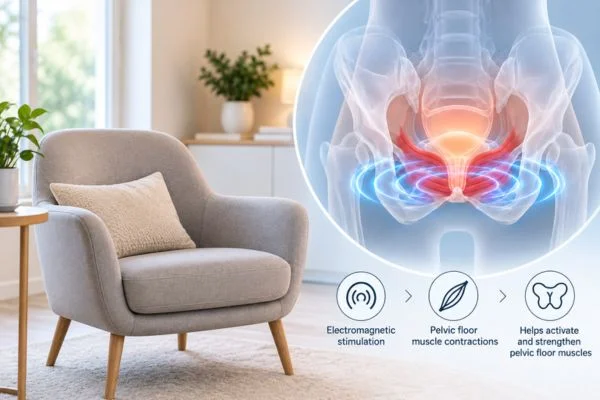
An EMS chair is a specialist device that stimulates pelvic floor muscles using electromagnetic energy.
During a treatment session, the individual sits on a specially designed chair while the device delivers electromagnetic pulses to the pelvic floor region.
These pulses stimulate nerves involved in muscle activation, producing involuntary pelvic floor muscle contractions.
Unlike traditional pelvic floor exercises, where the individual consciously contracts and relaxes the muscles, EMS treatment produces contractions through externally applied stimulation.
The treatment is generally carried out while fully clothed and does not normally require surgery, injections or internal devices.
However, the experience and suitability of treatment can vary depending on the equipment used and the individual’s health circumstances.
How Does Pelvic Floor Muscle Stimulation Work?
The pelvic floor is a group of muscles and connective tissues located at the base of the pelvis.
These muscles help support the bladder, bowel and, in women, the uterus. They also help control urination and bowel movements.
Electromagnetic pelvic floor stimulation works by generating a changing magnetic field that induces electrical activity in nerves associated with pelvic floor muscle contraction.
This can cause repeated muscle contractions during a treatment session.
The aim is to activate the pelvic floor muscles without requiring the individual to perform each contraction voluntarily.
What Happens During Stimulation?
The process generally involves three stages:
1. Electromagnetic energy is delivered
The EMS treatment generates electromagnetic pulses directed toward the pelvic floor.
2. Pelvic floor muscles contract
The stimulation activates nerves involved in muscle contraction, producing repeated contractions and relaxation.
3. Muscle activity is encouraged
The contractions provide neuromuscular stimulation. However, repeated contractions do not automatically improve muscle strength or bladder control.
Research into electromagnetic pelvic floor stimulation is ongoing. Some studies report improvements in certain urinary symptoms, but evidence varies by device, treatment protocol, and patient group.
Further high-quality research is needed to establish its long-term effectiveness and how it compares with established pelvic floor rehabilitation approaches.
What Can Affect Pelvic Floor Muscle Strength?
Pelvic floor muscle function can change throughout life.
Several factors may contribute to reduced strength, altered coordination, or difficulty controlling the pelvic floor.
Pregnancy and Childbirth
Pregnancy places additional demands on the pelvic floor, while vaginal childbirth can stretch or affect the muscles and surrounding tissues.
Some individuals experience changes in bladder control or pelvic floor function following childbirth.
Pelvic health physiotherapy is commonly recommended to assess and support recovery.
Ageing
Muscle strength and function can change with age, including in the pelvic floor.
However, pelvic floor problems should not simply be accepted as an inevitable part of getting older.
Assessment can help identify appropriate treatment options.
Menopause and Hormonal Changes
Hormonal changes during perimenopause and menopause can affect tissues within the pelvic and urinary systems.
Some individuals notice changes in urinary frequency, urgency or bladder control.
These symptoms can have several causes, and appropriate medical assessment may be beneficial.
Surgery or Medical Conditions
Previous pelvic surgery, neurological conditions and certain medical conditions can affect pelvic floor function.
People with these circumstances should seek advice from an appropriate healthcare professional before considering electromagnetic stimulation.
Chronic Straining or Increased Abdominal Pressure
Persistent constipation, repeated heavy lifting, and chronic coughing can place additional pressure on the pelvic floor.
Addressing contributing factors may form part of an appropriate pelvic health management plan.
What Happens During an EMS Treatment Session?
Although treatment procedures vary by device, sessions generally follow a similar process.
Initial Consultation
Before treatment, a consultation should determine whether electromagnetic pelvic floor stimulation is appropriate.
This may involve discussing:
- Current symptoms and concerns.
- Medical history and previous pelvic surgery.
- Pregnancy or recent childbirth.
- Implanted medical or electronic devices.
- Existing pelvic floor diagnoses.
- Previous treatments or physiotherapy.
- Any reasons why medical assessment may be required.
Not everyone will be suitable for EMS treatment.
During the Session
The individual sits on the treatment chair, usually remaining fully clothed.
Operate the device according to its instructions and the treatment protocol.
During stimulation, individuals may notice a pulsing, tightening or contracting sensation around the pelvic floor.
The sensation may feel unusual, but treatment should not be excessively painful. Report any pain or significant discomfort immediately.
How Long Does Treatment Take?
Session duration depends on the equipment and protocol used.
Some electromagnetic pelvic floor stimulation systems use sessions lasting approximately 20–30 minutes, although this is not universal.
Discuss the number and frequency of sessions during consultation rather than assuming a particular course will be appropriate.
After Treatment
Many people can return to their usual daily activities after a session, but always follow individual advice.
Temporary muscle fatigue, discomfort or other effects may occur.
If you experience persistent pain, worsening urinary symptoms, or unexpected symptoms, seek appropriate medical advice.
Can EMS Treatment Help With Bladder Control?
Pelvic floor muscle function supports urinary continence, and some electromagnetic stimulation devices have been investigated to manage certain urinary symptoms.
However, urinary incontinence is not a single condition, and different types require different approaches.
Stress Urinary Incontinence
Stress urinary incontinence involves leakage when abdominal pressure increases, such as during coughing, sneezing, laughing, or exercise.
Supervised pelvic floor muscle training is a recommended first-line treatment for many people with stress urinary incontinence.
Electromagnetic stimulation has been investigated as a possible intervention, but it should not be presented as a proven replacement for established treatments.
Urge Urinary Incontinence
Urge urinary incontinence involves leakage associated with a sudden, difficult-to-control need to urinate.
It may be associated with overactive bladder symptoms.
Management can include bladder training, lifestyle measures, medication and other interventions depending on the circumstances.
EMS treatment should not be assumed to address the underlying cause of urinary urgency.
Mixed Urinary Incontinence
Mixed urinary incontinence involves symptoms of both stress and urge incontinence.
Treatment usually depends on which symptoms are most troublesome and the findings of an appropriate assessment.
An EMS should not be marketed as a universal solution for mixed urinary incontinence.
EMS Treatment vs Traditional Pelvic Floor Exercises
Pelvic floor muscle training and electromagnetic stimulation use different methods to activate the muscles.
| Involves voluntary muscle contractions | Uses electromagnetic stimulation to produce contractions |
| Can be performed at home once correctly taught | Requires specialist equipment |
| Can be tailored and progressed with physiotherapy support | Settings depend on the device and treatment protocol |
| Recommended first-line management for many pelvic floor conditions | Evidence is still developing for specific clinical uses |
| Helps develop voluntary control and coordination | Does not necessarily improve voluntary muscle control |
Pelvic floor physiotherapy can also assess whether muscles are weak, overactive, poorly coordinated or affected by other difficulties.
This is important because not every pelvic floor problem is caused by muscle weakness. Some people have overactive or excessively tense pelvic floor muscles, for whom repeated strengthening contractions may be inappropriate.
Is EMS Treatment Suitable for Everyone?
No. Electromagnetic pelvic floor stimulation is not appropriate for everyone.
Depending on the specific device, contraindications and precautions may include:
- Pregnancy.
- Pacemakers or other implanted electronic devices.
- Certain metallic implants within or near the treatment area.
- Some neurological or medical conditions.
- Recent pelvic surgery or unresolved postoperative symptoms.
- Certain other conditions specified by the device manufacturer.
This is not an exhaustive list. Assess suitability against the device’s instructions and the individual’s medical history.
People with unexplained urinary symptoms, pelvic pain, recurrent urinary infections, blood in the urine or new changes in bladder or bowel function should seek appropriate healthcare assessment.
Are There Any Side Effects or Risks?
Although electromagnetic pelvic floor stimulation is non-invasive, it is not entirely risk-free.
Possible effects may include temporary discomfort, muscle fatigue or soreness.
Some individuals may find the contractions uncomfortable or unsuitable.
Risks and contraindications depend on the device and individual circumstances, and the evidence on long-term safety and effectiveness remains limited.
A consultation should include discussion of potential side effects, relevant precautions and realistic expectations.
How Many EMS Sessions Are Needed?
No single treatment schedule suits everyone.
The number of sessions used in published studies and manufacturer protocols varies.
Factors that may influence a proposed course include the specific device, the individual’s symptoms, treatment objectives and their response to stimulation.
It is important not to assume that a set number of sessions will produce a particular result.
Some individuals may notice changes, while others may experience little or no improvement.
Results vary and cannot be guaranteed.
Can EMS Treatment Replace Pelvic Floor Physiotherapy?
No. EMS treatment is not a direct replacement for pelvic health physiotherapy.
Pelvic health physiotherapists can assess muscle strength, coordination, relaxation, and other factors that contribute to pelvic symptoms.
They can also develop individualised programmes that may include pelvic floor muscle training, bladder retraining, breathing techniques and lifestyle adjustments.
For urinary incontinence, established clinical guidance generally prioritises appropriate assessment and conservative management.
For example, NICE guidance recommends supervised pelvic floor muscle training for at least three months as first-line treatment for women with stress or mixed urinary incontinence.
EMS treatment may be discussed as an additional option in selected circumstances, but consider its role alongside the available evidence and relevant clinical guidance.
When Should You Seek Medical Advice?
Pelvic floor and bladder symptoms can sometimes indicate an underlying medical condition.
It is advisable to speak to a GP or appropriate healthcare professional if you experience:
- Persistent or worsening urinary leakage.
- Sudden changes in bladder or bowel control.
- Pain when passing urine.
- Recurrent urinary tract infections.
- Blood in the urine.
- Pelvic pain or pressure.
- Difficulty emptying the bladder.
- Symptoms that interfere with everyday activities.
Sudden loss of bladder or bowel control accompanied by new leg weakness, numbness around the genitals or saddle area, or severe back pain requires emergency medical assessment.
Early assessment can help identify the cause of symptoms and guide appropriate management.
EMS Treatment at Lipo 360
At Lipo 360, we understand that pelvic floor concerns can be personal and sometimes difficult to discuss.
Our approach focuses on providing clear information, discussing whether treatment is suitable, and helping individuals make informed decisions.
We offer consultation-led electromagnetic pelvic floor stimulation for suitable individuals in selected UK areas.
During consultation, we can discuss how the treatment works, what a session may involve, relevant precautions, and whether further medical advice is appropriate.
We do not diagnose the causes of urinary incontinence or other pelvic floor conditions, and our treatments are not a substitute for medical care or pelvic health physiotherapy.
When treatment is considered suitable, expectations should remain realistic, as individual responses vary and we cannot guarantee improvement.
Frequently Asked Questions About EMS Treatment
Does EMS treatment hurt?
Some individuals experience a pulsing or contracting sensation during stimulation. Sensations vary, and treatment should not cause excessive pain. Report any discomfort to the practitioner.
Do you need to remove your clothes?
Many EMS systems are designed for use while the individual remains fully clothed. The procedure depends on the specific equipment and treatment protocol.
Can men use an EMS treatment?
Some electromagnetic pelvic floor stimulation devices are designed for use by both men and women. Suitability depends on the individual, the intended use of the device and any relevant medical conditions.
Is EMS treatment suitable after childbirth?
Suitability following childbirth depends on recovery, symptoms and medical circumstances. A pelvic health assessment is particularly important, and you should not start stimulation without considering postpartum recovery and device precautions.
Can EMS treatment help during menopause?
Some people experience urinary symptoms around menopause, but these can have several causes. Electromagnetic stimulation is not an established treatment for all menopause-related pelvic or urinary symptoms. Medical assessment can help identify appropriate options.
Is EMS treatment available at home?
Availability depends on the equipment, provider and suitability of the treatment environment. We can discuss Lipo 360’s mobile service options and practical arrangements during consultation.
Book an EMS Treatment Consultation
If you would like to learn more about electromagnetic pelvic floor stimulation, Lipo 360 can provide information about the treatment and discuss whether it may be appropriate for your circumstances.
Our consultation-led approach focuses on suitability, informed decision-making and realistic expectations.
EMS chair treatment is not a substitute for medical diagnosis, pelvic health physiotherapy or established treatment for urinary incontinence. Treatment suitability and outcomes vary.